 Join Our WhatsApp Channel for Updates!
CHEMISTRY
| Institution | BUTERE GIRLS HIGH SCHOOL |
| Course | CHEMISTRY |
| Year | 4th Year |
| Semester | Unknown |
| Posted By | Gilbert Etemesi |
| File Type | docx |
| Pages | |
| File Size | 831.2 KB |
| Views | 2325 |
| Downloads | 0 |
| Price: |
Buy Now
 Buy via
whatsapp Buy via
whatsapp
|


Description
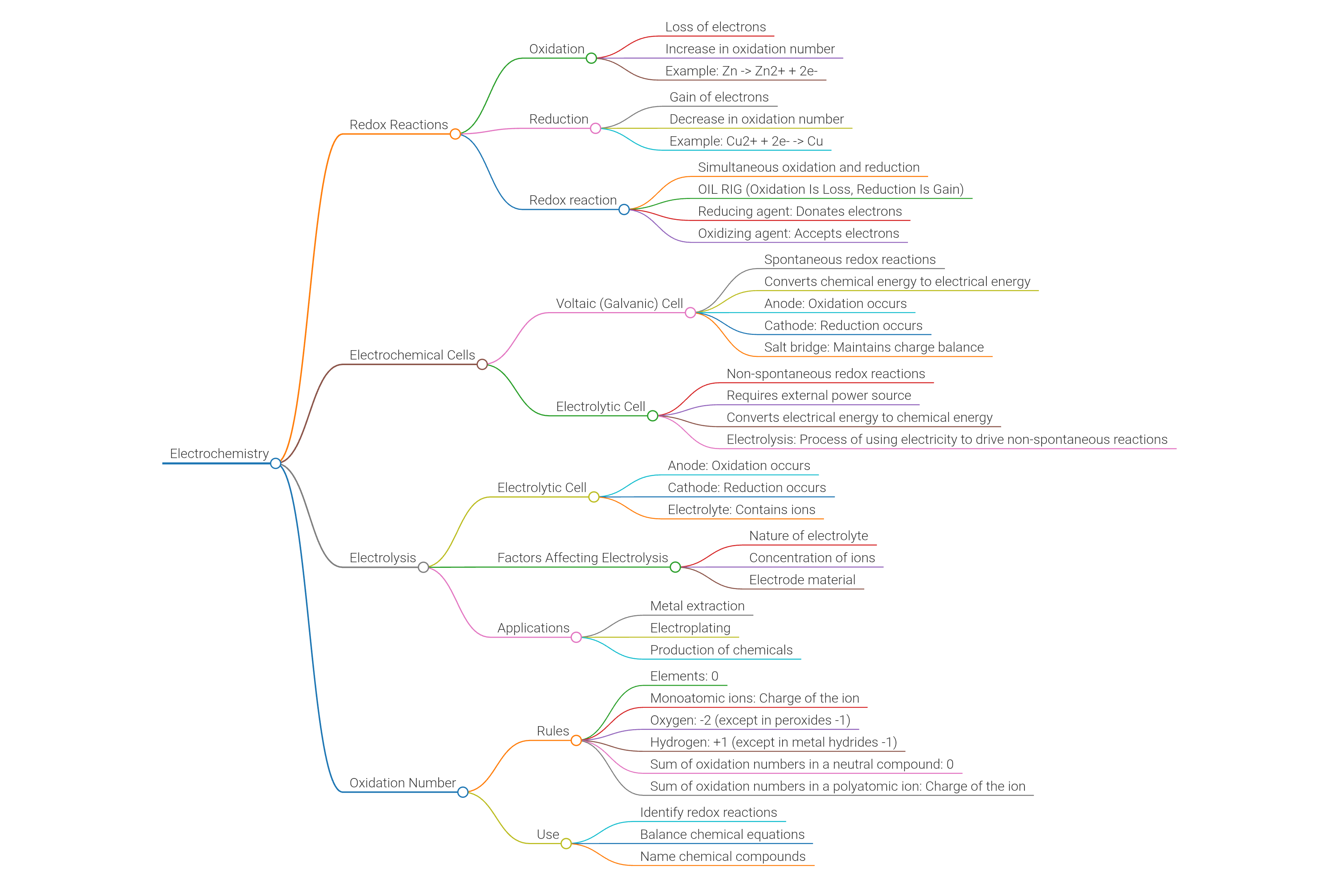
#Electrochemistry #ScienceMadeSimple #HighSchoolScience #ChemistryFacts
Below is the document preview.

SPB 9210: BASIC ORGANIC CHEMISTRY
Trending!
LATEST NOTES ON BASIC ORGANIC CHEMISTRY
37 Pages
8369 Views
0 Downloads
1.12 MB
BIOCHEMISTRY
DBY 2101 BIOCHEMISTRY
Introduction
The term ‘biochemistry’ was first introduced by a German chemist Carl Neuberg in 1903. Biochemistry
may be defined as a science concerned with the chemical nature and chemical behavior of the living
matter. Biochemistry is the study of the chemical basis of life. Biochemistry helps us understand how
biological systems work.
‘A biochemist is an investigator who utilizes chemical, physical or biological techniques to study
chemical nature and behavior of living matter
234 Pages
1289 Views
0 Downloads
5.29 MB
BIOCHEMISTRY
DBY 2101 BIOCHEMISTRY
Introduction
The term ‘biochemistry’ was first introduced by a German chemist Carl Neuberg in 1903. Biochemistry
may be defined as a science concerned with the chemical nature and chemical behavior of the living
matter. Biochemistry is the study of the chemical basis of life. Biochemistry helps us understand how
biological systems work.
‘A biochemist is an investigator who utilizes chemical, physical or biological techniques to study
chemical nature and behavior of living matter
234 Pages
1163 Views
0 Downloads
5.29 MB
APPLIED ORGANIC CHEMISTRY
Trending!
OCTANE RATING AND MOTOR FUELS
i) Gasoline consisting primarily of straight chain
alkanes has poor combustion characteristics
when burned in an internal combustion engine.
ii) Consequently air and vaporized gasoline
mixture tends to ignite spontaneously in the
engine’s cylinder before it is completely
compressed and ignited by the spark plug. This
may result in “Engine knocks” resulting in “loss
of power.
82 Pages
6175 Views
0 Downloads
3 MB
KCSE CHEMISTRY TIPS (THEORY AND PRACTICALS)
Trending!
Test for solubility of organic compound where you add ethanol is sometimes confused by students with esterification but in esterification addition of ethanol is followed by addition of few drops of concentrated sulphuric (VI) acid with gentle warming e.g...
25 Pages
9232 Views
10 Downloads
1.52 MB
CHEMISTRY FORMULARS HANDBOOK
Trending!
This booklet contains all the relevant formulaes arranged topicwise from form one to form four.
6627 Views
3 Downloads
171 KB
BIOCHEMISTRY
Polyurethanes are prepared from diisocyanates
and diols. Urethane (also called a carbamate) is a
functional group that contains both an ester and an
amide at a single carbonyl group.
Nucleophilic Addition Reaction: Example 1:
Sevin is a highly effective, biodegradable insecticide. It
affects the nervous systems of insects by blocking
access to the neurotransmitter acetylcholine.
57 Pages
1209 Views
0 Downloads
1.68 MB
BIOCHEMISTRY
PETROLEUM CHEMISTRY
Carbon is so Important in the Life Cycle. It has
numerous ways of bonding with many other
elements, particularly oxygen and hydrogen.
It can form both “organic” and “inorganic”
compounds. Organic compounds are considered
unstable in the biosphere because they are in the
reduced state.
Whereas Inorganic compounds, principally
calcite (CaCO3
) and dolomite (CaMg(CO3
)2
), are
stable because they are in the oxidized state.
Carbon is present in most substances that are
vital for the development of life (called
“biomolecules”): Proteins, lipids, sacharides, etc
76 Pages
1152 Views
0 Downloads
1.86 MB
BIOCHEMISTRY
Alkyl halides are organic molecules containing a halogen
atom bonded to an sp3 hybridized carbon atom.
• Alkyl halides are classified as primary (1°), secondary (2°),
or tertiary (3°), depending on the number of carbons bonded
to the carbon with the halogen atom.
• The halogen atom in halides is often denoted by the symbol
“X”.
53 Pages
1215 Views
0 Downloads
2.07 MB
BIOCHEMISTRY
Natural Gas
Natural gas is a gaseous fossil fuel consisting
primarily of methane but including significant
quantities of ethane, butane, propane, carbon
dioxide, nitrogen, helium and hydrogen sulfide.
Obtained from oil fields and natural gas fields,
and in coal beds.
Methane-rich gases are produced by the
anaerobic decay of non-fossil organic material, ie
biogas.
Total world production of natural gas in 1986
was 100 trillion m3
.
It is used as feed stock as well as fuel. It is
preferred due to its high Calorific Value
52 Pages
1134 Views
0 Downloads
1.17 MB