Maternity clinic business plan
| Institution | Kimathi Institute of Technology |
| Course | Social work and comm... |
| Year | 2nd Year |
| Semester | Unknown |
| Posted By | MAKORI KERECHA |
| File Type | docx |
| Pages | |
| File Size | 140.13 KB |
| Views | 2578 |
| Downloads | 0 |
| Price: |
Buy Now
 Buy via
whatsapp Buy via
whatsapp
|


Description
This is a business plan of running a maternity clinic
EXECUTIVE SUMMARY
CHAPTER ONE
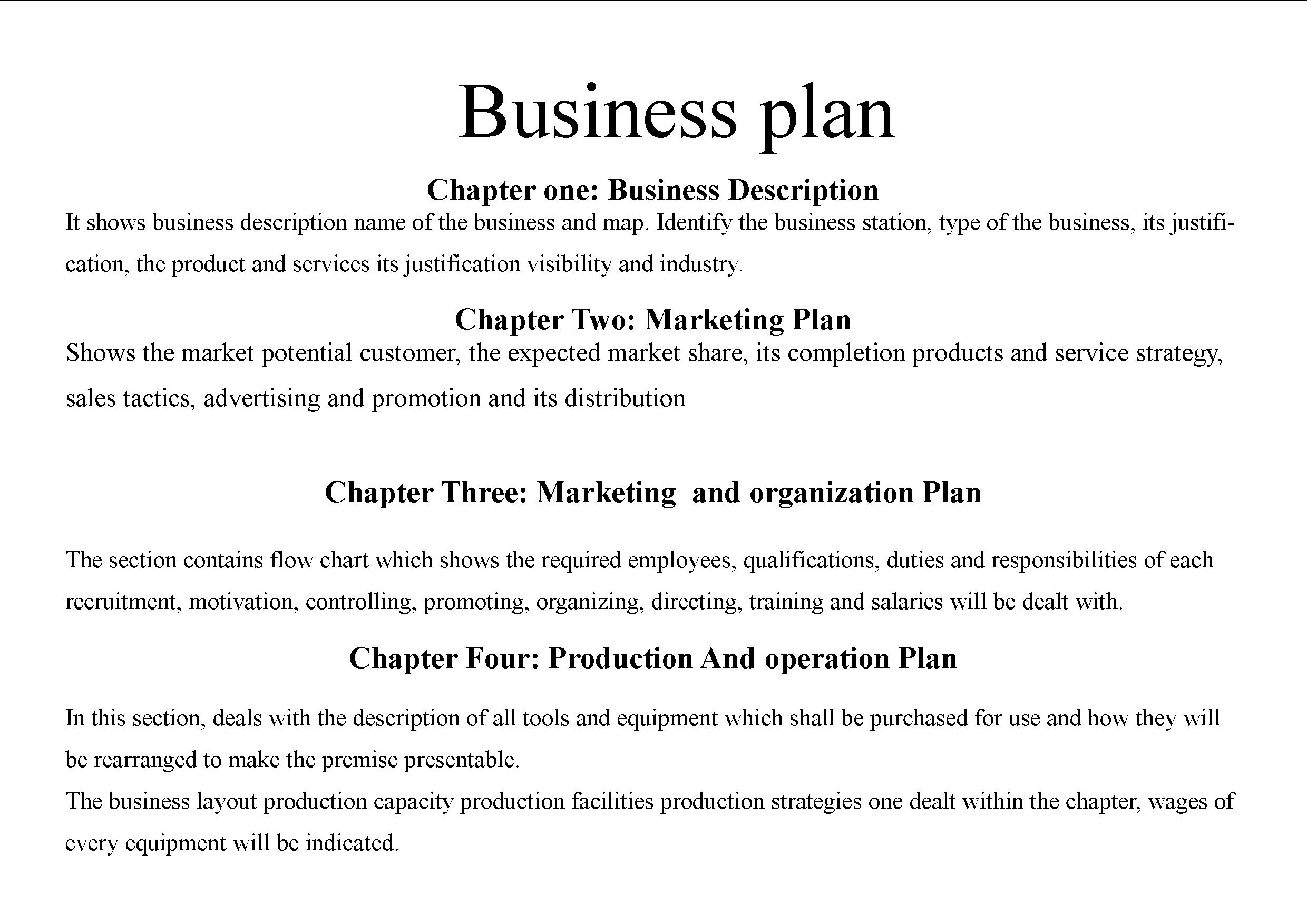
Chapter one contains the business describes whereby you describe the nature and management structure of the business, the owners background, the business name, the business location and address, form of ownership, type of business, products and services offered, justification of opportunity, the industry, primary and secondary objectives of the business and the entry and growth strategy.
CHAPTER TWO
Chapter two contains the following; marketing plan and it holds the type of customers, the market share or size, the competition level with others carrying out the same business, a swot analysis table, promotion and advertisement, methods of advertisement, the pricing strategy, the sales tactics and the distribution strategy.
CHAPTER THREEE
Chapter three contains the organization plan whereby you describe the management team and draw the organization chart, describe the qualities of the manager and the assistant manager, recruitment, training and promotion, you describe the remuneration policy and the incentives, the license, permit and by-laws and the support services offered.
CHAPTER FOUR
Chapter four contains the product operation plan that holds the production facilities and capacity, business layout, production strategy, production process, the regulations affecting the operation- health regulations, safety regulations and environmental regulation process.
CHAPTER FIVEChapter five contains the financial plan, pre-operational costs working capital, cash flow statement for the two years, the preform income statement, the balance sheets, the break-even analysis for the business, the desired business financing, proposed business organization and the profitability ratios.
Below is the document preview.

Effects of orientation programs on employee's performance- hrm research project
investigate the effect of orientation programs on employee's performance.
To investigate how introduction of new employees to co-workers affect employee's performance.
To examine how use of employee handbook affect employee's performance.
To examine the effect of assigning a mentor to new employees on employee's performance.
To investigate how employee tour of workplace affect employee's performance.
1510 Views
0 Downloads
67.44 KB
Adoption of Agent Banking as a Financial System and Its Benefits to Involved Financial banking
Trending!
ABSTRACT
The study about agent banking and its benefits to involved Financial Stakeholders was conducted in the banking Sector, comprised of two objectives: explore the process for adoption of agent banking for the creation of a financial system: A case of BK and Equity Bank Kenya; and identify the benefits of agent banking as a financial system for financial stakeholders, including agents and commercial banks, central bank, Access to Finance Kenya and customers. The agent banking is designed to help commercial banks increase their outreach without incurring additional costs of setting up physical branches. This study used an exploratory case study research design and sample size of 26 respondents. Data were collected using interviews and analyzed using content analysis. The study identified the process of adoption of agent banking as a financial system and benefits to involved financial stakeholders banking to follow the proposed steps. This study found that agent banking adoption process starts with Central bank issuing agent banking guidelines and Commercial banks apply to obtain prior written approval of the Central bank. In this process, commercial banks invite interested agents to apply seeking permission to provide financial services on their behalf. Technological devices such as mobile phone and POS machines and computer machines are used in the process to provide the financial services after signing the contract between a commercial bank and an agent. It benefits Central bank and Access to Finance Kenya in terms of promoting financial inclusion; increasing the market share and market penetration especially in remote areas for commercial banks. Agents benefit from it, in terms of commission received for agents and customers get convenient access to bank services, for customers. The study concluded that, agent banking that should be adopted by all the commercial banks in order to speed up the promotion of financial inclusion in Kenya. It therefore recommended that the central bank should provide online approval to easy the process. Commercial banks should keep increasing the number of agents to reach potential customers in unbanked locations. They should also adopt other technological devices to provide agent banking services and offer micro loans via agents. Increase the threshold of cash in and cash out transactions an agent cash effect.
2059 Views
0 Downloads
503.32 KB
Effects of destination marketing on tourism performance - hospitality and tourism research project
the current competitive business environment, the use of advertisement as a marketing strategy cannot be out looked in order to remain competitive in the tourism industry. Advertising has been embraced by many as a result of increased technological advancement, where by social media, broadcasting channels and other technologies have been embraced to market and create awareness about the existence of a product and services in a destination. This study therefore, sought to evaluate the influence/effectiveness of destination advertising on tourism performance in Thomsons Falls, Laikipia County. The specific objectives of this study were to examine the various methods of advertising used in Thomsons Falls, to determine the perception of tourists on the effectiveness of the methods used for advertising, to determine the impacts of the different forms of advertising on tourism performance and also to determine the challenges of advertising. Descriptive research design was used in this study. The study employed purposive sampling method in selecting the sample elements. Primarydatawascollectedusingquestionnairesandinterviewschedules.Secondarydatawas collected from documented information to supplement the primary data. The respondents were the employees in Thomsons Falls, TRA officers Laikipia County and the visitors. The target population was 160 respondents, where 50 respondents were accessed as the sample size. Data was processed and analyzed quantitatively. The analysis was done with the help of Statistical Package for Social Science (SPSS) and Excel. Measures of central tendency were used to analyze the quantitative data. The data was presented in form of graphs, tables and charts indicating the frequencies, mean and percentages. The key findings were that: Advertising results to increased profits by 23% to the tourism organizations. This is as aresult 15% increase in visitor numbers, the study also concurred that advertising helps in retaining a firms competitiveness in the market and enables a firm to compete favorably as provided by 21% of the respondents. The research found out from 42% of the respondents population that the use of social media, personal selling and media broadcasting are the most embraced marketing tools which are effective to both the organization and the clients. The study findings and recommendations are useful to the travel and tourism industry stakeholders, the government, all other linked industries and the entire society, and it emphasizes on the importance of advertising and how it affects tourism performance.
1402 Views
0 Downloads
322.68 KB
Factors affecting ecotourism - hospitality and tourism research project
Get your editable research project
Eco tourism is a form of tourism involving responsible travel (using sustainable tourism transport) to natural areas, conserving the environment and improving the environment and improving the well-beingof the local people.Eco tourism is the study under investigation. To get a clear view of the constituents of eco-tourism, therefore the core study focused in Ol Pejeta conservancy. The core purpose of the study was to find out the factors that affect eco-tourism management. Objectives of the study included: how the level of education of the tour operators affects eco -tourism management, determining how the code of conduct of tourists affects eco- tourism management finding out how social responsibility affects eco-tourism management and determining how cultural heritage affects eco-tourism management. The information gathered from the study will play a vital role in responding to some discrepancies in the field of tourism, especially in eco-tourism. The study was influenced by the growth of sustainable tourism by many tourism organizations, eco-tourism being one of the leading forms.This study will also be of great importance to learning institutions by providing information concerning eco-tourism which will also act as a source document for other researchers on the same field. The study used a descriptive survey design and the target population included the tour guides, the administration, the tourists and the locals. The sample design used was purposive sampling and the convenience sampling design. The data collection instruments used included questionnaires and interviews. The quantitate data was analyzed into frequencies, percentages and mean in tables.The findings and recommendations help in identifying whether eco-tourism management is of great importance in promotion of the whole tourism product in Ol pejeta conservancy or not. The recommendations give an outlay of what should be done to make eco-tourism of greater benefit to the entire tourism industry.
1514 Views
0 Downloads
109.23 KB
Effects of customer perceived risks of online hotel booking in kisii town - hospital and tourism research project
Get your editable research project
This research work evaluated customer’s perceived risk and online bookings of hotels in Kisii Town. It was a descriptive survey research in which 4 specific objectives, 4 research questions and 4 research hypotheses guided the study. The researchers purposively use 18 hotels in Kisii Town as its case study and 384 as its sample size. The research instrument used for data collection was a questionnaire on a 5 point rating scale, which was subjected to a reliability test that produce a reliability coefficient of 0.853, descriptive and inferential statistics on SPSS version 20.0 was used to analyze the data generated. Findings revealed that there is no significant relationship between financial risk and online booing of hotels in Kisii Town and there is a significant relationship between financial risk and online booking of hotels in Kisii Town . Secondly, there is no significant relationship between security risk and online booking of hotels in Kisii Town and there is a significant relationship between security risk and online booking of hotels in Kisii Town . Thirdly, there is no significant relationship between social risk and online booking of hotels in Kisii Town and there is a relationship between social risk and online booking of hotels in Kisii Town . Following the positive and insignificant relationship between online booking as a dimension of customer’s perceived risk, the study recommended that in booking of hotels online, customers should look out for secured and registered sites to avoid loss of money and other financial details and hotel owners introducing online platforms should also make sure that their sites are secured from intruders in other to protect their customers.
1369 Views
0 Downloads
121.97 KB
Recovery measures in star related hotels in kisii town in post COVID-19 - hospitality and tourism research project
Get your editable research project
Since March 11, 2020, the World Health Organization (WHO) established a global pandemic status for 2019 coronavirus disease (COVID-19). Global pandemic status means that the disease is throughout the world; the entire world population wherever their country is,can be potentially be infected. This study aims to examine the recovery measures in star-rated hotels in Nairobi post-COVID-19 Pandemic. The data collection method that was used in the study is the primary data collection method. Primary data collection involved the use of questionnaires distributed to the various star-rated hotels in Nairobi to determine the recovery measures put in place post the COVID-19 Pandemic and weresigned by various managers heading the various departments in the hotels. Questionnaires were used because they are easy to distribute among a large group and large amounts of information can be collected effectively and on time. Questionnaires are alsoeasy to facilitate because the questions are often easy and straightforward, therefore, making them very practical. Data was collected with the aid of a questionnaire as the ideal data collection tool. The target population was star-rated hotels in Nairobi which are 53 in total ranging from two to five-star ratings. The sampling design was a simple random sampling where every member of the population had an equal chance of being selected to be sampled and the sample size will be a target of all the 53 hotels which is the entire population. Data collected through questionnaires wereanalyzed using charts and converted into percentages.Out of the 53 listings of star-rated hotels in Nairobi to whom questionnaires were issued, the response rate was 18 respondents.A total of 88.9 % of the respondents knew about the COVID-19 Pandemic to detail while 11.1% were familiar with it. The study found out the importance of undertaking recovery measures. 66.7% of the respondents thought that it was extremely important to have recovery initiatives in place, 16.7% thought that it was very important,11.1 % thought that it was important while 5.5% thought it was somewhat important.Inconcltion, the study shows that Recovery and sustainability is the most important aspect for Star-Rated Hotels to survive in a post Pandemic era.
1339 Views
0 Downloads
692.7 KB
Structural and architectural design of gymnasium - building and civil engineering project
Trending!
This research project entitled “Structural Design Of G+1 Gymnasium in Kisii University” This research carries out the analysis of the structural elements such as the design of beam, slab, column, foundation and stair which was considered in this project and determine the capacity of my gymnasium where it will be able to accommodate 1300 people and also, we have to look about ventilation system that will provide fresh air at the gymnasium.
To achieve the above objectives, the inputs data including structural loadings and architectural drawings (dead loads) were entered and processed through software like archiCAD22 and AutoCAD to produce in details all architectural drawings, and Etabs for analysis of maximum moment and shear on the structural element for Concrete Frames (Beams & Columns) and Prokon for Slab and Footing. Methods from knowledge to analyze and calculating the structural elements such as reinforcement, quantity of items, checking safety for soil if it is able to resist to the super structural element.
It was concluded that the design of gymnasium was a very careful task to achieve because each structure member was designed at their most critically loaded areas to provide the maximum safety resistance and serviceability of such public building.
The results showed that the designed steel reinforcements to be arranged in slab l5T12@200 C/C and 3T10 @250 C/C at the bottom while for T beam designed steel reinforcements were 6T20@47 C/C at the top and 7T16@28 C/C at the bottom another L beam designed steel reinforcement were 2T8@273 C/C at the top and 2T8@280 C/C at the bottom. And for column the designed steel reinforcement was 5T25@250C/C for ground floor part the column and T8@200 C/C for first floor, second for the designed steel reinforcement were 6T16@100 C/C
and 6T16 @ 100 C/C, for the stair designed steel reinforcement were 8T10@260C/C for main and 6T8@160 C/C.
2173 Views
0 Downloads
276.21 KB
Job application portal system project report
The human resource departments in many Institutions have various processes which include checking employee attendance, disbursing payrolls, applying for jobs, handling company events and training programs, handling leave and absence requests and lastly, checking on employee welfare. These processes, however, are handled manually for example job application could become tedious due to the many processes that an applicant would have to undergo at the physical establishment in order to apply for a job of choice. Such manual handling of these processes was tiring and therefore cause inaccuracy and inefficiency.
The developed solution was a web-based information system that would seek to automate these processes in the human resource department. It would be able to make job application easier for applicants and ensure that employees requesting leaves and absences would be able to do so by communicating to the right channels through the system.
The system was developed using the prototyping methodology. Other tools that were used include PHP as the programming language, Brackets as the IDE , MySQL as the DBMS and usability testing as the testing method.
376 Views
0 Downloads
809.28 KB
Online medical laboratory management system project report
This project presents a theoretical framework of online medical laboratory system, it discussed about different scholar’s perspective of online laboratory system, the aim of this project to develop an online medical Laboratory booking system for patients to make lab booking at their convenient time because currently, Bliz Hospital uses a manual based system to keep record of customer’s booking and make new laboratory bookings. This project discussed the tool and technology used in developing the proposed system (the system has a front end by using html, Css, JavaScript to display the content structure and a back end of database using MySQL and PHP). Laboratory systems were compared to identify their similarities and differences. A number of development methodologies were discussed and why one of the methodologies was chosen for this project. Methods used to gather the requirement specification was also discussed and how the researcher will use this as a guideline in developing the proposed system. Diagrams were created describing each system. Demonstration of different WebPages available on the website was discussed and then an evaluation was conducting using two methods to evaluate the website.
372 Views
0 Downloads
2 MB
Online assignment management system project report
Almost all collages and higher institutions of learning, includes some form of assignment in their assessment for each courses. The assignments are allocated manually by the instructor to the students, which are either carried out in groups or by individual student. This manual management of assignment is becoming obsolete due to its inconvenience, inefficiency, and low accuracy. Currently, web-based management systems have been widely implemented due to the development of Web technologies. Therefore in other to effectively manage these assignment process, a well-designed assignment submission system is needed, hence the need for an online assignment submission system to facilitate the allocation, collection and marking of the assignments scripts.
This project introduces a web-based Assignment Management System, which automates all the manual aspects of the conventional way of handling assignment. Its friendly user interfaces allow instructors and students to handle their assignments in a convenient, efficient, and simplified manner. In addition, this system also has very good features of portability and extensibility. The aim of this study was to create a web based online assignment submission system and the objective of the system is to facilitate easy interaction of Instructors and students for assignment allocation, submission and grading purposes. The system was created to eliminate the traditional process of allocating an assignment and collecting the feedback for the assignment. The system was implemented as a web based application through the useful tools of hypertext mark-up language, cascading style sheet and Java Script as the front end design while using MySQL database for storing and retrieving data as the back end tool. The implementation of this system was aimed at downloading and uploading online assignments for students, with each interface having information about the instructions and its description for easy access. The main goal of this project is to design and implement online assignment submission and provide an interface use for uploading and downloading assignment by instructors and the submission by the students, while the instructor also perform the task of grading each student submission automatically. The most obvious advantage offered by this online assignment submission system is that it offers an easy and faster transmission of assignments between both the instructor and the students than using the manual process.
391 Views
0 Downloads
1.04 MB