Ice cream vendors business plan
| Institution | Kimathi Institute of Technology |
| Course | Food and beverage |
| Year | 2nd Year |
| Semester | Unknown |
| Posted By | MAKORI KERECHA |
| File Type | docx |
| Pages | |
| File Size | 231.75 KB |
| Views | 2246 |
| Downloads | 0 |
| Price: |
Buy Now
 Buy via
whatsapp Buy via
whatsapp
|


Description
This is a business plan for starting and running an ice cream vendors enterprise .
EXECUTIVE SUMMARY'S
CHAPTER ONE
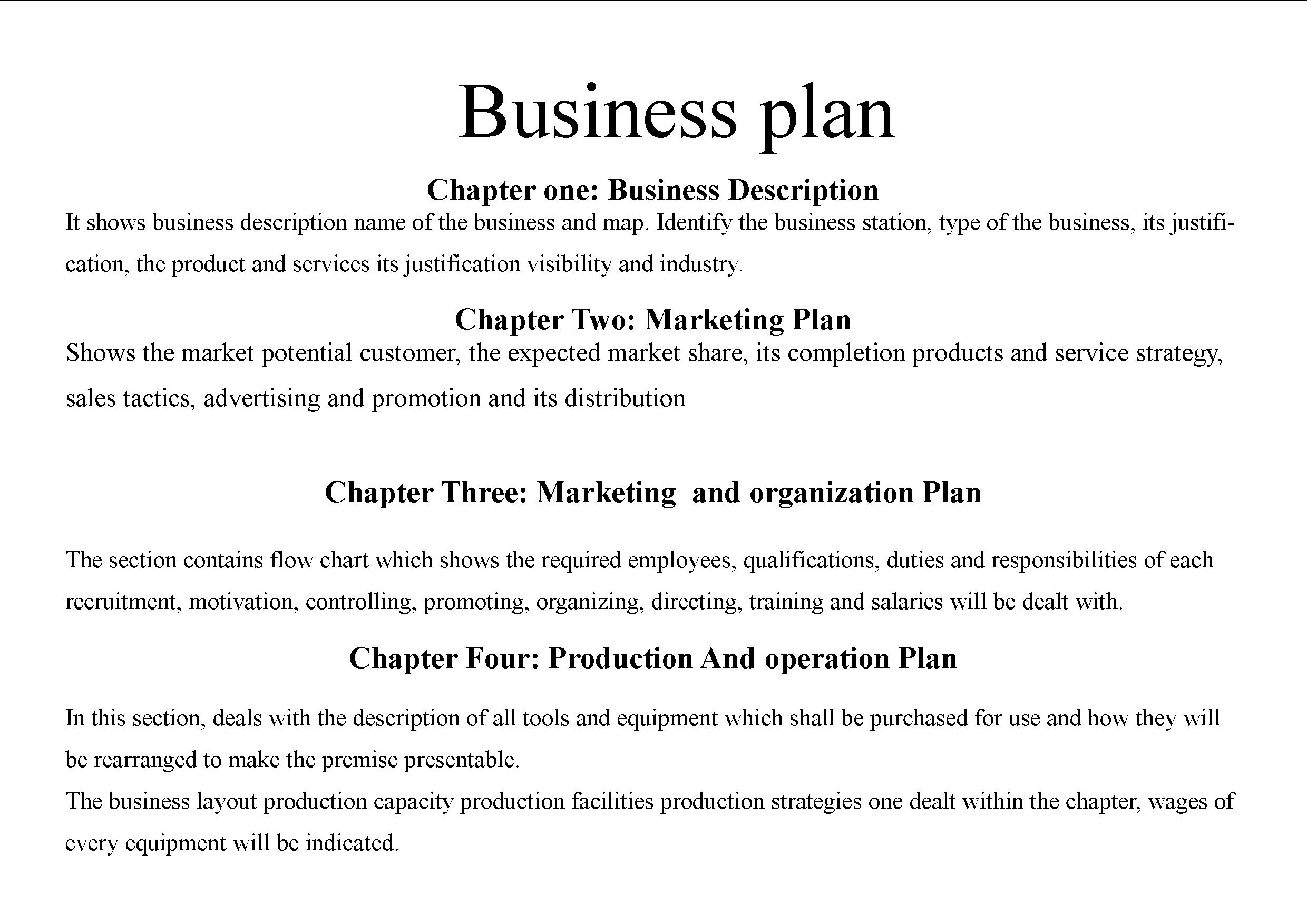
This chapter contains business description, owner’s background information, business name, business location, address, forms of ownership, type of business products and services, goals and objectives and others.
CHAPTER TWO
Here we have market plan which contains customers, domestic customers, institution, government department, market share/size, competition, promotion and advertisement and many more
CHAPTER THREE
We have organization/management plan which contains the management team, organization charts, other personnel, recruitment, training and promotion, recruitment of employees, training, remuneration and incentives, licenses, permit and by-laws
CHAPTER FOUR
It contains production facilities and capacity, production strategy, process and regulations affecting operations. The process involves the steps to be followed in producing garments especially commercial paper patterns and offering services of high standard than competitors. Besides this, it also contains expenses incurred in the business with regulation affecting all operations with the premise.
CHAPTER FIVE
Contains financial plan, pre-operational costs, cash flow statement, Performa, balance sheets, break even analysis and even others which have been indicated in table contain chapter five
The financial statement helps to compare the performance of the business with another business. The interpretation will also enable the business to compare the current performance and also predict the future.
Below is the document preview.

Pharmacy management system project report
This project illustrates the designing and implementation of a web based Pharmacy management system for the Bliss Medical Centre. The primary aim of is to improve accuracy and enhance safety and efficiency in the pharmaceutical store by minimizing issues occur in day to day operations.
Currently they are using a manual system which is very hard in handling. Managing the stock with paper records based on the expiry dates and the quantity available in the stock are some major problems identified in the problem domain. The system intends to minimize the workload of the staff and increase the value of the business to gain the competitive advantages in the pharmaceutical industry.
The system allows different tasks for different users. They are administrator, cashier, data entry operator and normal user who can logging the system as different user roles to perform their functions separately. Administrator has all privileges of the system. Create users, generate reports for managerial decisions, manage employee attendance are some administrator tasks. In addition, the system will show a notification about expiry dates of drugs and stock ending details. It is easy to handle stock management through the software rather than working with paper records.
Customers are the main asset of the business. So, the system will help to reduce waiting time of the customers. They can check the availability of the items before they come to the pharmacy by using the search facility provided in the pharmacy web site.
528 Views
0 Downloads
10.78 MB
Design of a casual wear dress project report- fashion and design
Clothing is a factor in every day human life and interactions with others. Clothing is a systematic means of transmitting information about the wearer. The purpose of this research is to understand the relationship of fashion designers ‘cultural values and personal experiences and the process of creativity in their design process. This study was designed to find out factors influencing the way they dress. The main objective in this study was to identify the physical,i) To produce simple and appropriate outfit. ii) To improve the branding image for fashion and design.iii) To look neat and well-groomed but relaxed iv) To promote recognition of the design. The research will be mainly in Nakuru town. I will involve various people in doing the research e.g. experts and designers. The casual wear will explain into further details hence the upcoming designers will also expand on their knowledge of designing other trending new styles. The clients will be informed of the latest trending designs and fashi
1928 Views
0 Downloads
3.43 MB
Design of cell phone detector project report- electrical power option
Trending!
Cell phones are widely used in the world. While people have to be connected to one another, there are situations or places where there usage is to be prohibited either due to security reasons or it may cause health hazards.
Cell phones detection has been on investigation for a long time. There are techniques which have been formulated or proposed on how cell phones can be detected. Most of the use the features such as audio system, RF system and common materials of the phones and try to look into how they can be used as basis to detect mobile phones
This project utilizes the RF system of the cell phone as the features to be detecting its presence. A circuit that detects signals of the range 0.9GHz is used to detect a cell phone when in use. When the signal is detected, an LED blinks to indicate the use age of a cell phone within a radius of 1.5 mete
2003 Views
0 Downloads
2.51 MB
DESIGN OF DOOR SECURITY ALARM USING IR SENSOR PROJECT REPORT- ELECTRICAL POWER OPTION
Trending!
This research focuses on detection of an authorized access to residential and commercial buildings when residents are away fromthe access gate of thehouse .The system is simple reliable and touch less activator security system and uses sensor technology to revolutionized the standard of living .The system provides the best resolution to most of the problems forced by house owners in their daily life. Due to its simple electronic component nature, it is more adaptable and cost effective .the system is divided into three units which employs both the use of the dc battery and the mains supply to ensure constant power supply to the circuit. The design of the system was achieved by considering some factors such as economy, availability of the components and research materials, efficiency, compatability and portability and also durability in the design process. The system works on the principal of thetouch lesssensor. The general performance of the system depends on the presence of intruder enterrring through the door .the overall system was constructed and tested and wok perfectly.
The IR theft alarm consists of infrared IR Transmitter, IR receiver and comparator IC LM358. This detector circuit can be used to detect any human entry, obstacles, theft, etc, in order to use IR detector circuit to sense human entry, the IR sensor has to be placed opposite to each other .IR rays is directly falls on IR receiver which in turn is given as input to the ic LM358 which is used as a comparator. Comparator is a circuit which compares two voltages. (Reference voltage and input voltage) produced output according to the input. The output of the comparator is given to the transistor which acts as an inverter and drives a LED and a Buzzer. Buzzer will give you sound if LED is turned ON.
2109 Views
0 Downloads
2.05 MB
AUTOMATIC BIDIRECTIONAL VISITOR COUNTER - ELECTRICAL POWER OPTION
Digital Visitor Counter is device or system that can read the incoming and outgoing agents or traffics that tends to visit or physically visit a place and. The system is proposed and designed in this paper that is the visitor counter that is bidirectional in feature which can read both the incoming and outgoing traffic and agents at same time securely. In this system, up to 999 incoming or outgoing visitors can be counted using microcontroller. Microcontroller is used here to make a secure count over a large number of visitors. This system is essentially required in many places where count for the visitors is needed by the administrator of that system. The design and demonstrations are produced in this paper.
1977 Views
0 Downloads
1.22 MB
Architectural and Structural Design of a G+3 commercial Building- Building and Civil engineering project
Trending!
This project presents a detailed study titled "Architectural and Structural Design of a G+3 commercial Building: Case Study of Kisii Central district" The study focuses on a G+3 commercial building at Kisii Central station that measure 207,775m x 158,64m, comprising essential features like balconies, agency office, restaurant, shops, bus parking, kitchens, bathroom, offices. Each floor stands at a height of 4 m.
The structural analysis employed fundamental civil engineering principles to meticulously design key elements, including beams, slabs, columns, foundations, and stairs. Longitudinal beams, with a depth of 500 mm, width of 200 mm, and a flange width of 907 mm, utilized Ø16 mm reinforcement bars at both top and bottom. Slabs were diversified into three types (continuous and discontinuous), each with a 25 cm thickness and reinforced with Ø12 mm bars. Columns incorporated Ø25 mm bars with Ø8 mm links at 144 mm center to center.
Foundation design adhered to a bearing capacity (Pb= 350 KN/m2), resulting in foundations measuring 1500*1500*500 mm, reinforced primarily with Ø20 mm bars. Stairs facilitating interfloor access were crafted with a 265 mm going, 180 mm riser, 200 cm flight height, and a pitch of 32.530. Reinforcement comprised Ø16 mm bars at the bottom and Ø8 mm bars at the top. This dissertation offers a comprehensive exploration of the structural intricacies involved in designing a G+3 commercial building. Through meticulous analysis and design, it provides valuable insights into construction practices, particularly within the unique context of Kisii Central district.
2034 Views
0 Downloads
5.27 MB
STRUCTURE DESIGN OF PUBLIC LIBRARY G+3- BUILDING AND CIVIL ENGINEERING PROJECT
STRUCTURE DESIGN OF PUBLIC LIBRARY G+3
1941 Views
0 Downloads
7.3 MB
The effect of strategy implementation on the organization performance of Bank of Abyssinia
The purpose of this study was to assess the effect of strategy implementation on the organization performance of Bank of Abyssinia (BOA). Secondary and Primary data was utilized in this study. Secondary data was obtained from reviewing text books, publications, financial records and internal records of BOA. Primary data was gathered with the aid of questionnaires and interview. One hundred ninty eight (197) questionnaires were sent to employees of the bank and one hundred seventy four (174) responses were obtained representing a response rate of 87.5%. The results of the administered questionnaires showed a fairly high level of agreement for the features of the various factors that relates strategy implementSation and performance of the bank. However, this study showed that structures put in place for bottom-up information flow were not known to all employees. This study also showed that the leadership approach the bank use is vague that majority of employees were uncertain for the leadership approach effectiveness at BOA. The researcher recommends that all factors of the various dimensions should be put into the right perspective so as to help the general workforce of the bank to understand the main objectives and strategic implementation in place to achieve the objectives of BOA. And lastly the bank should develop effective communication benchmark, since change bring resistance on employee communicating the change in strategy, roles and responsibility and its importance help to achieve the objective and also contribute to stay competitive in the industry.
1926 Views
0 Downloads
197.3 KB
explore practice and challenges of motivating employees in improving quality and productivity in the Kenya Construction Design and Supervision Works Corporation- business research project
In a globalized and knowledge-based economy, quality and productivity management are keys to an organization’s success and survival in a competitive global environment. Many construction organizations therefore have to adopt quality and productivity as reliable management tools.These elements are primarily important inputs which lead directly or indirectly to the success of the construction industries. Construction is the major driving factor of the current Kenya economy, but current such practice in the Kenya building construction projects is still facing delays, cost overruns, poor quality and low productivity. Thus, thepurpose of this study was to explore the practices and challenges of motivating employees to improve quality and productivity in the Kenya Construction Design and Supervision Works Corporation. To achieve this objective, case study qualitative research design was employed. Thirty-five informants were used as samples to generate the required qualitative data through in-depth interviews with case informants through probing, semistructured interviews with key informants, and conducting documentary analysis method using interview guide, and documentary analysis template as data collection instruments, respectively. Thematic analysis and content analysis methods were used to analyze the data collected from different sources. Thematic issues emerged in data analyses were used to answer study questions and address the objectives. Findings reveal that top management mostly used non-financially related extrinsic motivational mechanisms in differential manner between experts and administrative staff in its different Sectors, Centres, and Corporate Service. Concomitantly, there were multi-faceted challenges encountered which had emanated from various factors while trying to improve quality and productivity in those divisions of the Corporation. Therefore, these findings have implications for business policy, professionals, interventions, and for further studies at different levels and various contexts at large.
1315 Views
0 Downloads
87.44 KB
factor influencing profitability of micro & small scale leather products manufacturing enterprises in Kisii County- business research project
Micro and Small (MSSEs) play an important economic role in many countries. In Kenya, for example the MSSE sector contributes over 50 percent of new jobs created but despite their significance. The purpose of this study will be to explain in detail factors influencing on the profitability of Micro and Small scales leather products manufacturing Enterprises in Kisii Town, Ogembo, and Yeka Sub counties Kisii County Administration, Kenya. The study uses explanatory research design. The study targeted Leather Manufacturing MSSEs that were based in Kisii County, Kenya. Census was usd for sample determining strategy because the total population is small, primary data was collected from the study respondents using survey and questionnaires which was self-administered and others researcher administering. Data was analyzed descriptively and presenting through figures, tables, percentages.
When doing regression analysis we determine whether or not there is a relationship between the independent variable and the dependent variable by examining the significance of the regression F statistic for the regression analysis less than the level of significance of 0.05. We reject the null hypothesis because there is positively and significantly strong relationship between the independent the capital and the dependent variable of profitability. Generally, in order to increase the profitability of leather products manufacturing in MSSEs level should need more attention. Also enterprises should improve managing time, money, decrease material wastage I recommended that firms have to improve their financial status, and technological capability on their side. On the other hand, the government has to support them by giving special incentives that promote the manufacturing industry in terms of financial accessibility, promotional support and acess of raw materials easily with comfortabl price for enterprises.
1449 Views
0 Downloads
224.36 KB