Emergency shelters business plan
| Institution | Kiambu Institute of Science and Technology |
| Course | Food and beverage |
| Year | 1st Year |
| Semester | Unknown |
| Posted By | MAKORI KERECHA |
| File Type | docx |
| Pages | |
| File Size | 133.37 KB |
| Views | 1107 |
| Downloads | 0 |
| Price: |
Buy Now
 Buy via
whatsapp Buy via
whatsapp
|


Description
This is a business plan for starting and running emergency shelters.
EXECUTIVE SUMMARY'S
CHAPTER ONE
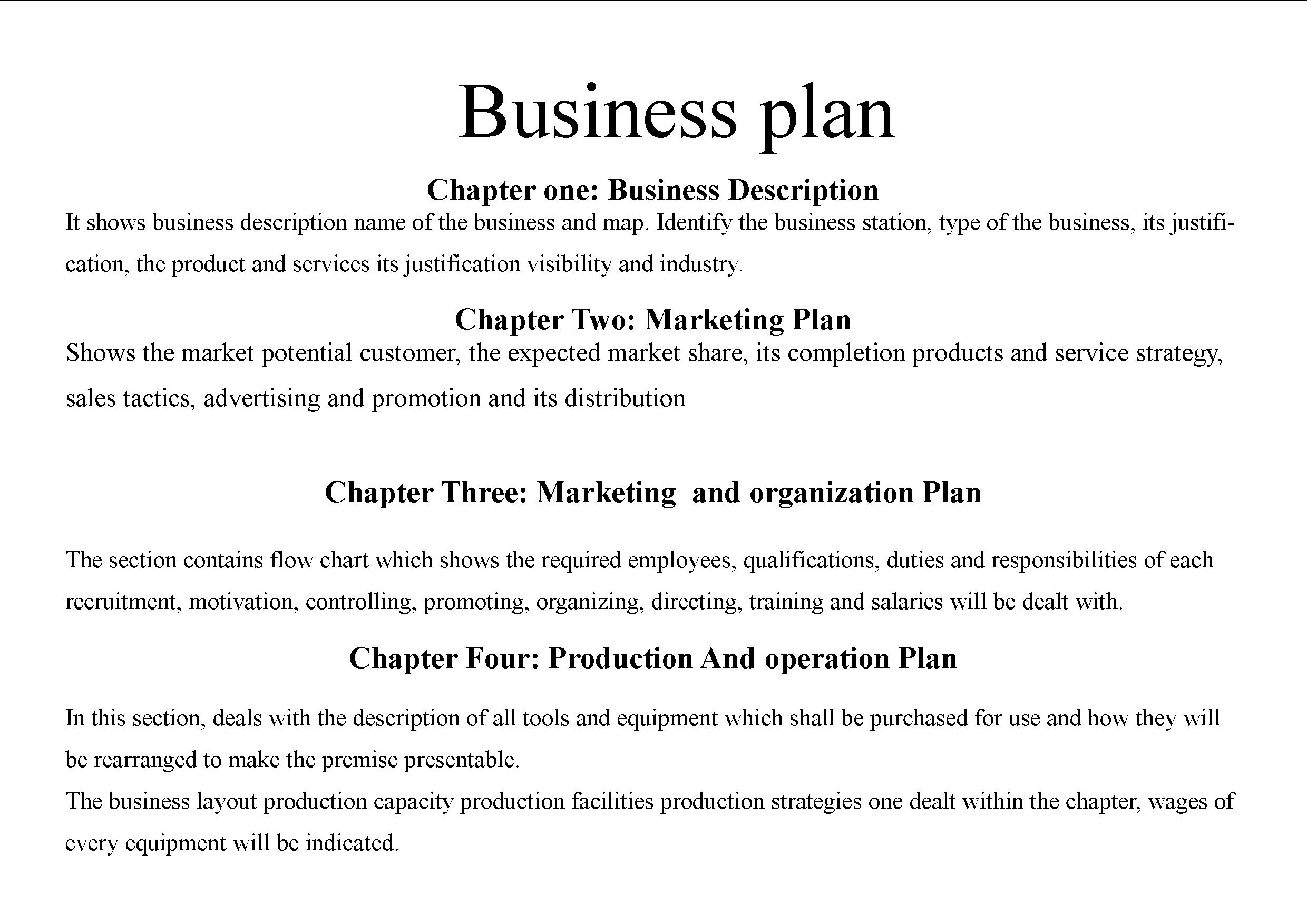
This chapter contains business description, owner’s background information, business name, business location, address, forms of ownership, type of business products and services, goals and objectives and others.
CHAPTER TWO
Here we have market plan which contains customers, domestic customers, institution, government department, market share/size, competition, promotion and advertisement and many more
CHAPTER THREE
We have organization/management plan which contains the management team, organization charts, other personnel, recruitment, training and promotion, recruitment of employees, training, remuneration and incentives, licenses, permit and by-laws
CHAPTER FOUR
It contains production facilities and capacity, production strategy, process and regulations affecting operations. The process involves the steps to be followed in producing garments especially commercial paper patterns and offering services of high standard than competitors. Besides this, it also contains expenses incurred in the business with regulation affecting all operations with the premise.
CHAPTER FIVE
Contains financial plan, pre-operational costs, cash flow statement, Performa, balance sheets, break even analysis and even others which have been indicated in table contain chapter five
The financial statement helps to compare the performance of the business with another business. The interpretation will also enable the business to compare the current performance and also predict the future.
Below is the document preview.

Effect of competitive strategies on the performance of liquefied petroleum gas companies in Nairobi County, Kenya- business research project
is essential for Liquefied Petroleum Gas (LPG) companies to outperform their competitors in the industry. LPG consumption has expanded in Kenya in recent years, thanks to better import and distribution facilities. The use of LPG in the commercial sector doubled to around 124,000 metric tonnes by 2017, up from a low base in 2014. In 2018-19, rapid demand growth continued, with demand almost doubling to 217,000 metric tonnes. Demand has boosted competition among LPG manufacturers, which has resulted in price wars. This study examined how competitive strategies influence the performance of LPG companies and how the performance of liquefied petroleum gas companies in Nairobi County is affected by competitive strategies. The specific research objectives were to determine the impact of focus strategies on performance; to define the impact of differentiation strategies on performance, and to determine the impact of cost leadership strategies on LPG business performance in Nairobi County. The study used a descriptive cross-sectional research design approach. LPG companies in Nairobi County were investigated and the sample size was 154 respondents, selected using simple random sampling. Cronbach's alpha was used to verify reliability, and content validity was assessed by consulting domain experts. The data was analysed using IBM Statistical Package for Social Sciences (SPSS) version 29.0.2.0. The key findings of the study were that, focus strategy increased performance significantly and differentiation strategy on the other hand had a non-significant increase on performance. Similarly, a unit increase in cost leadership strategy led to a non-significant improvement in performance. The study recommends that the leaders or decision makers of LPG companies widely adopt a focus strategy as it has a significant influence on firm performance compared to other strategies. The study also suggests that further studies be performed on the impact of differentiation and cost leadership strategies on firm performance.
779 Views
0 Downloads
1.29 MB
Effect of financial accessibility on the sustainability of manufacturing Small and Medium Enterprises in Nairobi County, Kenya- business research project
Access to finance has remained one of the notable factors that impede the sustainability of small and medium-sized enterprises in the developing world. This study aims to investigate the effect of financial accessibility on the sustainability of manufacturing small and mediumsized enterprises (SMEs) in Nairobi County, Kenya. The elements of access to finance that are in the interest of this study include cost of credit, interest rate, credit rationing and business risk. The specific objectives were to analyse the influence of loan processing fees on the sustainability of manufacturing small and medium enterprises (SMEs); to establish the influence of interest rate on the sustainability of manufacturing small and medium enterprises (SMEs) in Nairobi County, Kenya; to determine the influence of credit rationing on the sustainability of manufacturing small and medium enterprises (SMEs) in Nairobi County, Kenya; and to find out the influence of business risk on the sustainability of manufacturing small and medium enterprises (SMEs) in Nairobi County, Kenya. The study was underpinned by the Delegated Monitoring theory, Relationship Lending Theory and legitimacy theory. The study adopted descriptive research design methodology, which involved the collection of firsthand data from the operators of manufacturing SMEs in Nairobi County, Kenya. Stratified sampling technique was used to select the manufacturing SMEs that were involved in the study. A total of 89 participants were involved in the study. Data collection involved administration of online questionnaire to the participants using online communication platforms. The study documented positive effect of loan processing fees on sustainability of manufacturing small and medium enterprises in Nairobi, Kenya. Secondly, there was a negative and not significant effect of interest rate on sustainability of small and medium manufacturing companies in Nairobi County. Thirdly, there was positive and significant effect of credit rationing on sustainability of manufacturing small and medium enterprises. Further, there was positive and not significant effect business risk and sustainability of manufacturing small and medium enterprises in Nairobi, Kenya. From the findings it can concluded that loan processing fees, legal fees, insurance fees and negotiating fees have inverse effect on sustainability of manufacturing small and medium enterprises in Nairobi County, Kenya. Secondly, sustainability of manufacturing small and medium enterprises is significantly affected by inflation rates and total cost of credit. Thirdly, credit access was limited by number of loans applied by manufacturing companies, type of loan products applied for, repayment period and collateral required. Further, the higher the price fluctuations, competition and emergence of technologies the hinders the odds of sustaining firms. There is need for evaluation of measures aimed at minimizing credit access costs through mitigation of loan processing fees, legal fees, insurance fees and negotiating fees. Moreover, there is need for adoption of time series approaches while managing price fluctuations, competitiveness and emergence of new products.
681 Views
0 Downloads
938.6 KB
EFFECT OF MOBILE MONEY MERCHANTS SERVICES ON FINANCIAL PERFORMANCE-ACCOUNTING, BANKING AND FINANCE RESEARCH PROJECT
Mobile money has become a popular payment method for many Kenyan businesses. The goal of this study was to determine how mobile money merchant services affected the financial performance of small and medium-sized businesses. Nakuru is a city in Kenya. The specific goals were to determine the effect of affordability of mobile money merchant services on the performance of small and medium enterprises, the effect of availability of mobile money merchant services on the performance of small and medium enterprises, the effect of effectiveness of mobile money merchant services on the performance of small and medium enterprises, and the impact of Value Added Services available on mobile money platforms on the performance of small and medium enterprises. The theories underpinning the study were; Technology Acceptance Model and Innovation Diffusion Theory (IDT). The study adopted explanatory survey design based on cause-effect relationship. The study targeted 12,250 licensed SMEs Mobile Money Merchants operating in Nakuru City. The study sampled 221 Small and Medium Mobile Money Merchant enterprises using stratified sampling technique. Small and Medium Enterprises in Nakuru City were chosen using simple random sampling. The study relied on primary data gathered through structured questionnaires as the primary data collection tool. The data was analyzed using regression analysis technique. The information was then presented in the form of frequency tables and figures. The study established that the effectiveness of Mobile Money Merchant Services had no effect on the financial performance of Kenyan Small and Medium Enterprises. Mobile Money services, according to the study, are becoming increasingly popular in many countries as a convenient, secure, and cost-effective way to make payments and transfers. The study recommends that the governments should create and enforce legislation that regulates and safeguards the use of Mobile Money services in order to ensure their safety and security.
555 Views
0 Downloads
127.4 KB
DESIGN OF MULTIPURPOSE CUPBOARD TO MINIMIZE RESIDENTIAL SPACE PROJECT REPORT
ABSTRACT
This research project, titled “Design and Fabrication of Multi-Purpose Cupboard Model to Minimize Residential Space,” addresses the challenges of deforestation driven by timber demand for furniture, high costs of traditional pieces, and limited space in Kenyan urban households. The problem stems from massive tree cutting for wood-based furniture, leading to environmental degradation like soil erosion and biodiversity loss, while families struggle with inadequate storage and sleeping solutions in compact homes. The general objective is to develop a cost-effective, space-saving cupboard integrated with a bed using marine boards from agricultural waste, minimizing environmental impact and enhancing interior design. Specific objectives include designing the model, estimating costs, highlighting benefits over existing furniture, providing technical drawings via software like ArchiCAD 18 and SketchUp, and preparing bills of quantities.
The methodology involved data collection through observations and interviews with 60 participants (45 customers, 15 businessmen, 5 authorities), revealing 85% support for combined furniture. Design utilized 3D modeling for a structure with dimensions H: 185 cm, L: 195 cm, W: 45 cm, featuring modular shelves and a pull-out bed. Fabrication included cutting marine boards, assembling the carcass with rabbet and pocket hole joinery, installing heavy-duty slides, and finishing with sanding, sealant, and white varnish, executed over two weeks in a workshop.
Results yielded a durable prototype costing 399,000 Rfw, supporting up to 150 kg, with successful load-testing confirming stability and functionality. This innovation promotes sustainable practices, reduces space usage, and offers an affordable solution for low-income families, contributing to Rwanda's environmental and housing goals.
923 Views
0 Downloads
935.77 KB
STRUCTURAL AND ARCHITECTURAL DESIGN OF A FOUR STOREY RESIDENTIAL APARTMENT PROJECT REPORT
This project, titled “Structural and Architectural Design of a G+4 Apartment” in, Kisii Town, Kisii County was undertaken as part of the requirements for obtaining an Advanced Diploma at KNP. The project encompasses both architectural conception and structural design, with a strong emphasis on effective communication to all stakeholders. Each section of the project is clearly numbered to facilitate easy navigation, allowing users to quickly access specific areas of interest. The design process was informed by a wide range of references and follows the standards set out in various authoritative documents, particularly the British Standards (BS). The structural analysis began with the calculation of all expected loads, including the buildings self-weight. The architectural design includes detailed plans showing the dimensions and overall shape of the building. The structural design covers critical elements such as beams, slabs, columns, stairs, and foundations, adhering to the guidelines of BS 8110-1:1997. Detailed plans and reinforcement schedules for these elements are also provided. The total cost of the building is estimated at Ksh16,685,000. The design criteria are primarily based on British Standards.
994 Views
0 Downloads
1.4 MB