Cancer screening center business plan
| Institution | Kisii National Polytechnic |
| Course | Social work and comm... |
| Year | 1st Year |
| Semester | Unknown |
| Posted By | MAKORI KERECHA |
| File Type | docx |
| Pages | |
| File Size | 99 KB |
| Views | 4631 |
| Downloads | 0 |
| Price: |
Buy Now
 Buy via
whatsapp Buy via
whatsapp
|


Description
This is a business plan for starting and running a cancer screening center .
EXECUTIVE SUMMARY'S
CHAPTER ONE
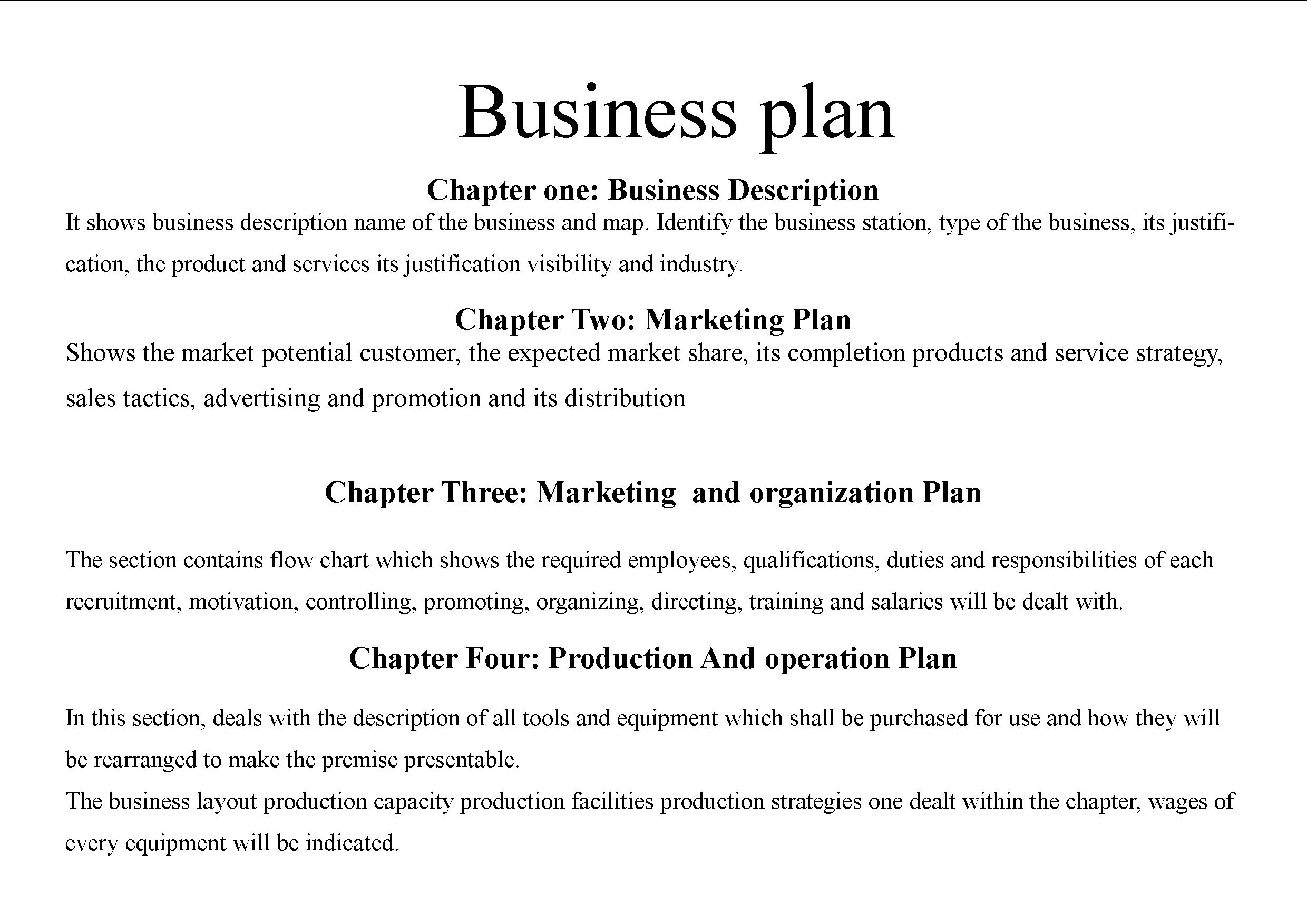
This chapter contains business description, owner’s background information, business name, business location, address, forms of ownership, type of business products and services, goals and objectives and others.
CHAPTER TWO
Here we have market plan which contains customers, domestic customers, institution, government department, market share/size, competition, promotion and advertisement and many more
CHAPTER THREE
We have organization/management plan which contains the management team, organization charts, other personnel, recruitment, training and promotion, recruitment of employees, training, remuneration and incentives, licenses, permit and by-laws
CHAPTER FOUR
It contains production facilities and capacity, production strategy, process and regulations affecting operations. The process involves the steps to be followed in producing garments especially commercial paper patterns and offering services of high standard than competitors. Besides this, it also contains expenses incurred in the business with regulation affecting all operations with the premise.
CHAPTER FIVE
Contains financial plan, pre-operational costs, cash flow statement, Performa, balance sheets, break even analysis and even others which have been indicated in table contain chapter five
The financial statement helps to compare the performance of the business with another business. The interpretation will also enable the business to compare the current performance and also predict the future.
Below is the document preview.

Structural design of swimming pool project report-
Trending!
swimming pool is a large room constructed where people eat meals and share ideas outside the meals time. The project focuses on the construction of a modern swimming pool that serves all the heart of our institution providing a space for social interaction. The swimming pool is more than just a place to eat; it is an important place where students and staff come together to share meals, ideas and experience. The proposed swimming pool will be designed to accommodate dietary need for people. It will feature sitting areas flexible dining spaces for events. The swimming pool will have different offices in it. It will have some rooms which will have catering places so as to enable the people with physical disabilities to access food and all members of the college community. It will be a place where the entire college will come to eat together showing togetherness. The construction of this swimming pool is an investment is overall well- being of college community. It promotes a sense of belonging. The researcher recommends that a construction of a modern swimming pool to solve the problems.
3585 Views
0 Downloads
1.31 MB
DESIGN OF A WATER SUPPLY SYSTEM FOR KISII SCHOOL IN KISII CENTRAL DISTRICT- BUILDING AND CIVIL ENGINEERING PROJECT
Trending!
The study was todesign a water supply system for Kisii School in Kisii Central district. The study was guided by the following objectives mainly to increase access to safe adequate and sustainable water, sanitation and hygiene service delivery. And specifically to characterize and determine the quality of the available water sources, to determine water demand for the community and to design an effective water supply system. The project was carried out with in Ikamiro parish and covered a design and layout distribution of the pipes. The project consisted of design of accessing water demand for water supply, design of storage reservoirs, selecting suitable source and design pipe network system. Desk study was employed in collecting data related to Population of Kisii Ikamiira parish, operation and maintenance of water supply system among others. It included thorough search through the internet, reading the available journals, Lecture notes from KIU and different university concerning the subject under study. The Kenya Water Supply Design Manual second Edition (2000) was used in the design of the system. The researchers recommend that the local council authorities and the community should fully be involved in the implementation of the design alongside the contractors. This is to instill ownership of the scheme in the community minds and provide community members with the skills for the upcoming tasks.
3438 Views
0 Downloads
521.86 KB
DESIGN OF ABOVE-GROUND EQUALIZATION WATER TANK- BUILDING AND CIVIL ENGINEERING PROJECT
Trending!
Water is important for human beings; it is used for personal hygiene, drinking, food cooking, toilet-flushing and other domestic activities. In Kisii High School there is a problem of lack of water which causes inhabitants to suffer from all problem caused by insufficient water for daily use.
This project was selected to contribute in solving the serious problem concerning insufficient water in Eastern Province. The equalization water tank was designed to increase the available quantity of water to satisfy the population of students for at least four years.
During this research I used internet, books and other source of information to base my design standard requirements.
The calculation begins by considering the volume required, which is 2084.3 m3 with height of 6.2m, freeboard height= 0.2m,The section area of tank is 347.38m2 for the design of the whole tank to be accurate determined
3562 Views
0 Downloads
710.54 KB
Structural and architerctural design of head offices, apartment and hotel G+7- civil and building project
Trending!
The Structural and Architectural design G+7 buildings which include hotels, apartments, and head offices are the subject of this initiative. The goal is to reduce the building's negative environmental effects while optimising energy efficiency and occupant well-being through the use of eco-friendly materials and technologies.
Important elements consist of: Sustainable Materials: Reducing reliance on conventional building materials by using bio-based composites, locally sourced lumber, and recycled materials. Energy efficiency is the use of high-performance insulation, solar panels, and passive design techniques to reduce energy use and dependency. All the chapters and other main points in this project are numbered to help those who may need to use it, to easily reach an interesting section by omitting others.
This project also has been compiled referred to various document of many authors and by using equations provided in codes of practice, with a focus on British standard (BS). The analysis begins with the evaluation of all loads that are expected to be carried by the structure including its self-weight to determine the foundation’s dimensions. In the architectural design, the plans are conceived in order to show dimensions of building, and the shape of building also its height. About structural design, this project details only foundation by following BS 8110-1:1997 and BS 6399-1:1996. On the basis of the results, the detailed plans are presented.
The design criteria were conducted mainly based on British Standards (BS). The PROKON software and excel spread sheet was used for some design of member but in the most part I have been using the manually way.
Structural Design Details: 1. Slab Design: • The slab was designed with a cover of 25mm, a thickness of 30cm
Provided reinforcement: As = 452mm² with 4T12
The slab was evaluated for deflection and deemed satisfactory, with both maximum positive and negative moments being adequately resisted.
No shear reinforcement was required, as the shear stress (0.3 N/mm²) was well below the shear capacity (0.38 N/mm²).
2. Beam Design: • The beam was designed with a total height of 0.75cm, aligned with ly/12 and ly/8 requirements.
• Reinforcement provided: 7T16 bars (1407mm²).
3. Column Design: • The most loaded column (C-C2) was designed as a square column with dimensions of 400mm x 400mm.
Effective heights: 6000mm along the major axis, 3500mm along the minor axis.
The column was classified as a braced short column.
4. Footing Design: • The footing was designed for a soil bearing capacity of 250 kN/m².
• A square footing of 1.6m x 1.6m was selected, keeping the design stress within the soil’s bearing capacity.
5. Stair Design: • The stair was designed for a height of 3400mm between the ground and first floors, with a flight length of 3.3m at an angle of 27.9°.
The design included 11 risers and 10 goings, each 3300mm in dimension.
Moment for the flight: 30kNm. This detailed overview covers both the structural design aspects of the project, ensuring compliance with design standards while contributing to the growth of Camp Kisii’s urban landscape.
3877 Views
0 Downloads
2.69 MB
Structural deisgn of G+2 building Case of residential apartment- building and Civil engineering project
Trending!
In order to ensure the building stability, it was necessary to determine the adequate dimensions of structural elements; this project deals with the calculation and design of reinforced concrete structure. Several figures and tables have been used to illustrate the text and contribute to a better understanding of the subject matter.
The proposed apartment building is 23.25 m x 18 m dimensions. It is three-storey building and it has bedrooms, living rooms, dining rooms and bathrooms. The height of each floor is 3.20 m.
All the building members (slabs, columns, foundations and stair) are calculated by analytical method by using the basic knowledge in civil engineering.
The height of the beam is 55 cm; its width is 20 cm whereas the width of flange is 90.7 cm for longitudinal beams. The maximum and minimum bar of reinforcement bar at top for all beams is Ø16 the same to the reinforcement at bottom.
The critical panel of slab was designed, slab thickness is 15cm the maximum size of reinforcement bar is Ø12mm .The high loaded column was designed and the maximum reinforcement bar size is Ø25mm.Links of Ø8 mm at 300 mm center to center were provided to hold main reinforcement bars.
Foundation were designed by considering the bearing capacity Pb= 320 KN/m2 and designed upper load from columns. Each designed foundation is 200*200*50 cm and the maximum reinforcement bar is Ø20 mm in foundation.
In order to provide access from floor to next floor stair was designed .Going of stair is 300 mm, riser is 150 mm, the flight height is 160 cm and its pitch is 29.530, that stair is reinforced by Ø16 mm.
3669 Views
0 Downloads
4.62 MB
Architectural and Structural Design ofThree-Storey Modern Market Building- building and Civil engineering project
Trending!
This dissertation is a detailed study entitled "Architectural and Structural Design ofThree-Storey Modern Market Building: Case Study of Kisii Central District." The object in question is a three-storey modern market building measuring 52.153 length x42.995 width with main features like balconies, washrooms, bedrooms, verandahs, and kitchens. Each floor stands at a height of 3.80 m. The structural analysis applied general principles in civil engineering to carefully design key items such as beams, slabs, columns, foundations, and stairs. The longitudinal had a depth of 800 mm and a width of 300 mm, with a wing width of 907 mm using Ø40 mm reinforcement bars both on the upper and lower sides. Slabs were divided into three categories, namely continuous and discontinuous. Slabs had 15 cm thickness and were supported by Ø12 mm reinforcement bars.
Columns of the mix contained Ø40 mm bars with Ø8 mm links at 144 mm centre to centre.
The bearing capacity Pb = 400 KN/m 2 was used for the foundation design, which gave the foundation dimensions 4000*4000*500 mm, reinforced with Ø20 mm bars as the significant reinforcement. Stairs providing access between the floors were constructed with a going of 305 mm and a riser of 160 mm. The flights rose 200 cm with a pitch of 29.53 0. The reinforcement included Ø16 mm bars at the bottom and Ø8 mm bars at the top.
This dissertation presents a detailed study of the structural details involved in the construction of a three-story apartment building. It gives insight into the best construction practices through careful analysis and design, considering a context that differs from any other: the Kisii Central District.
3594 Views
0 Downloads
1.72 MB
ASSESSMENT OF CLAIMS MANAGEMENT PRACTICES IN THE CASE OF AFRICA INSURANCE SHARE COMPANY- BUSINESS RESEARCH PROJECT
Trending!
purpose of this study is to assessment of claims management practices in case of AIC. The research’s particular emphasis was given to non-life /general insurance business of the company. The study tried to answer the questions that; what are the main factors of claims settlement dalliance in AIC, how claims management practices are source of customer compliance, how efficient is the claims management practice in AIC and what are the main reasons of claims rejection in Africa insurance company. The general objective of the study is to investigate claims management processes and practices of claims management. The study employed cross-sectional survey design in which 315 external customers selected randomly and 88 internal customers (i.e., staffs) involved in the claim process were the subject of the study by administering specially designed questionnaires. The results obtained suggest that the prevailing claims handling process is a major problem area affecting customers’ satisfaction that need to be overhauled. The clients of AIC believed that lack of updated and clear claims management manuals and procedures, lack of skilled, knowledgeable, experienced and committed claim staff and in claims service are the key challenges in AIC. More importantly, centralized claims management, external and internal effects of immoral behavior of the clients, surveyors, garages, spare part dealers, and internal employees along with sluggish interdepartmental/work units/ communications towards claims management were the major issues in the company. Poor compliant handling system of the company, delay of claims management from notification up to settlement to claimants, lack of intensive standard training for claims staff, and lack of work standard for internal employees, external surveyors and garages decelerates the rate at which quality service is delivered in the company. Thus, it’s recommended based on the finding that the AIC should create an effective, transparent and customer-oriented means to standardize the services, educate the customers, decentralize the claim unit and make use of the standard monitoring mechanism as per the strategies and policies of the company so as to maximize the level of satisfaction of motor claimants. The study suggests that to solve the claims settlement problems should begin from underwriting and the policies should be have an Amharic version and the management should also solve the problems of claims department centralization and dalliance problems. In addition the company should provide timely response for its customers and the investigation process should do in good cooperation with in claims department.
2366 Views
0 Downloads
484.69 KB
ASSESSMENT OF EMPLOYEES’ PERFORMANCE APPRAISAL PRACTICES AND CHALLENGES THE CASE OF DEBUB GLOBAL BANK - BUSINESS RESEARCH PROJECT
Trending!
The paper is designed to Assess the Employees’ Performance Appraisal Practice and Challenges i n Debub Global Bank S.C .On the basis of data collected through questionnaires and interview; the researcher have tried to disclose some of the real problems of performance appraisal practice based on the opinion of the respondents in this Bank. The questionnaire was distributed to 68 employees of the bank working in head office: in which 54 were fully completed and returned. The questionnaire was distributed to the employee’s on the basis of simple random sampling based on respondent willingness and cooperation of the respondents. The data collected were analyzed using SPSS 23.On the basis of the data obtained from the respondents, lack of clarity of performance appraisal standards inadequacy to reflect the performance of the employees’ jobs and duties, and manager related problems are identified at Debub Global bank S.C.
In Addition, the researcher has discovered that evaluators usually do not continually record or document the performance of employees over the evaluation period. In this regard, it was identified that evaluators evaluate the performance of employees on the basis of recent behaviors’.
Based on the findings of the study, the researcher has recommended that Performance appraisal standard should be revised in participation of the employees for they are the actual persons who do the job and evaluated. In order to explain employees who do not know why performance evaluation is conducted the Bank’s management should create awareness on purpose of performance appraisal. The Bank’s HR directorate should follow up those raters who are not having file and support those using it now. The Bank’s management should give training to supervisors and managers who are responsible for conducting performance evaluation. This will boost raters’ ability to assess and advance raters’ unfairness.
2294 Views
0 Downloads
335.99 KB
ASSESSMENT OF THE OPPORTUNITY AND CHALLENGES OF INTERNET-BANKING ON CO-OPERATIVE BANK OF KENYA
Trending!
The challenging for financial service market results more pressure on banks to develop and utilize alternative delivery channels, with a view to attracting more customers and improving customer perceptions and encouraging loyalty. The study is aimed at dealing with the opportunity and challenges of internet banking on Co-operative bank of Kenya. The study used descriptive research method that incorporated qualitative research approaches. In conducting this research, data was obtained from both primary and secondary sources. A descriptive case study that makes use of a combination of questioners that is taken account of 50 from employees and 80 from customers that are used because it helped the researcher clarify and explain the existing phenomenon in a meaningful, justifiable and numerical manner. Based on this research paper research problem it concerned on Co-operative banks that do not have an insight into how their customers perceive and evaluate internet banking service quality. Large number of COOP customers Disagreed on that customers have enough information about internet banking. Great Majority of COOP employees and most customers highly aware on the importance of internet banking to save time and money. Majority of COOP employees strongly agree on that internet banking is more accessible to users and customers are neutral. Great Majority of the COOP employees and majority of customers responded on that the service is very low to be adoptable to disable and elder people. Large number of COOP employees and customers responded on that COOP never provides a training to enhance awareness of customer. Great majority of employees and majority of customers agreed on that customers encounter problems related with Internet while using the service. Large no of employees and customers responded on that COOP seldom provides an alternative way when the Internet is slow. Majority of employees agreed on that COOP has experienced and skilled IT professionals to administer latest technology and Majority of customers disagreed on that COOP has experienced and skilled IT professionals to administer latest technology. COOP should have to create awareness and provide sustainable information in order to increase how to use/access internet banking since the study shows there is a gap b/n COOP and customers as COOP is only trying to fulfill the targeted percent .Internet banking service providers ought to look out for indicators of innovative ways of creating awareness about the service through participation in trade organizations, exhibitions as well as adoption of new technologies of Internet banking. In addition, it would be useful to study the corporate client’s diverse satisfaction needs in order to respond to them precisely. Further studies need to be carried out knowing that the Internet banking service is still new in most of the developing countries thus, new issues, needs and demands may arise as the banks continue to implement the strategy.
3653 Views
0 Downloads
214.79 KB
Assessment of the Practices, Challenges and Prospects in Implementation of Organizational Change- business research project
Trending!
The purpose of this study is to assess the Practices, Challenges and Prospects in Implementation of Organizational Change in the Case of Splitting Kenya Electric Power Corporation. Both qualitative and quantitative approaches are employed. The primary data are gathered from managers and employees of EEP and EEU through survey questionnaires, interview, and focus group discussion and from secondary data. The researcher identified that the major bottleneck in implementation of organizational change includes inexperienced consultant in organizational wide change; lack of monitoring assumptions, risks, costs, return on investment; lack of adequate training and implementation of performance measurement system; lack of leadership support and couching; gap in operational planning and clear day to day activities; and lack of information technology support and provision of adequate resources. The research concludes that the implementation of change in organization in splitting EEPCO has failed to meet its target, especially in relation to improvement of customer service. The study recommends the two organizations to resolve the bottlenecks that are identified in order to meet their target of better customer. Careful monitoring of the entire change process is essential in order to be able to measure its impact and evaluate its success to fulfill the gap accordingly.
2321 Views
0 Downloads
487.48 KB