SICKLE CELL
| Institution | University |
| Course | BACHELOR OF SCIENCE... |
| Year | 1st Year |
| Semester | Unknown |
| Posted By | stephen oyake rabilo |
| File Type | |
| Pages | 27 Pages |
| File Size | 419.56 KB |
| Views | 950 |
| Downloads | 0 |
| Price: |
Buy Now
 Buy via
whatsapp Buy via
whatsapp
|


Description
This is name given collectively to a group of Haemoglobin S abnormalities.
• The haemoglobin S is recessive and can only be inherited from both parents, symptoms manifest in those with homozygous [HbSS], normal haemoglobin trait is [HbA]
• This is a condition arising from a mutation in the haemoglobin [HbS] leading to the red blood cells being sickle shaped and decreasing the oxygen carrying capacity. This is also hereditary, parents with the sickle cell trait have a 25% of having a child with sickle cell disease
Below is the document preview.
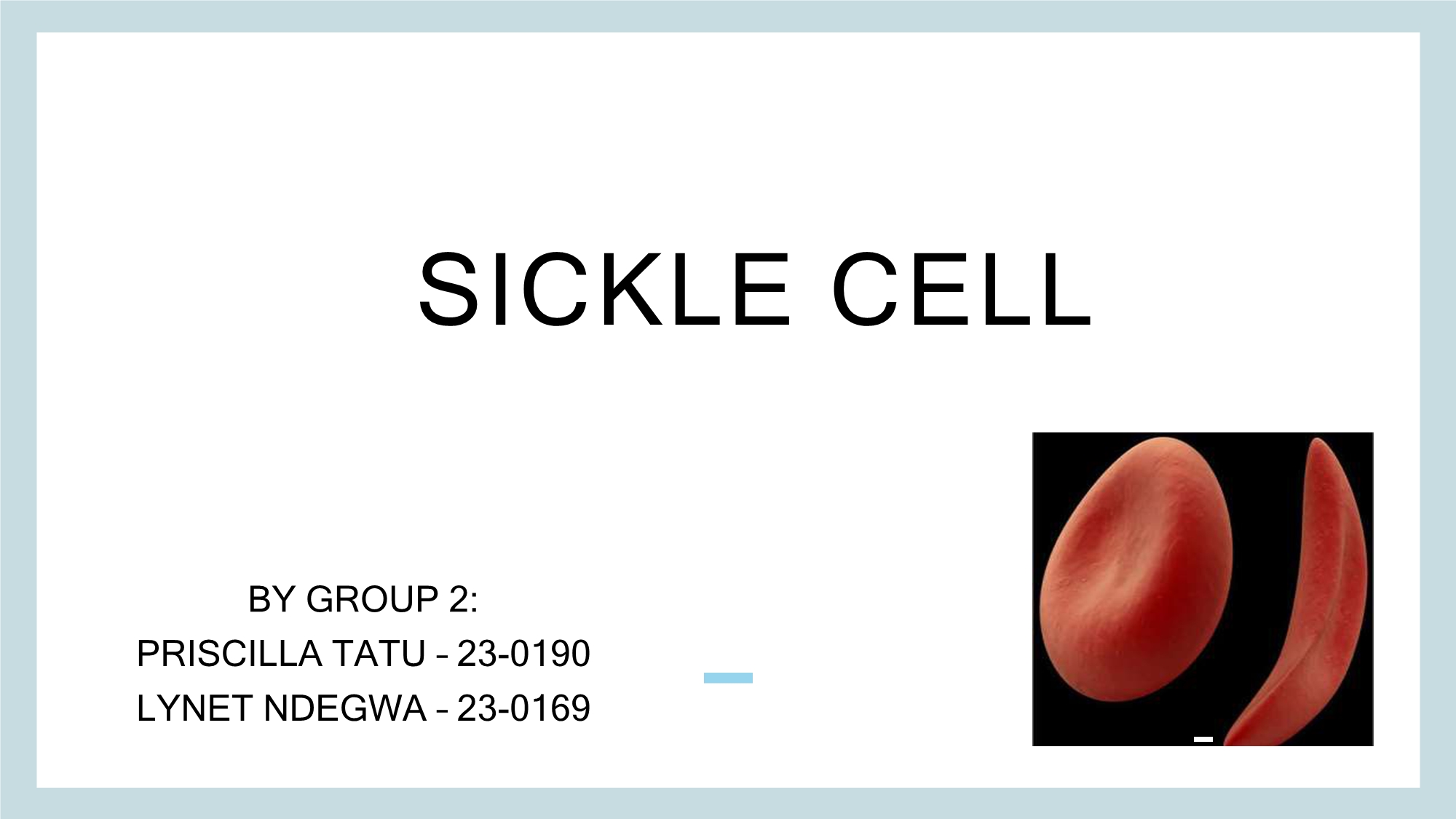

Sickle cell Crisis
Trending!
Sickle cell disease (SCD)
• A group of hereditary disorders in which the normal adult hemoglobin (hemoglobin A) is partly or completely replaced by abnormal sickle hemoglobin (HgbS).
• The most common genetic hematologic condition in children
• Transmitted by autosomal recessive pattern of inheritance.
• Patient with this condition is homozygous for the sickle cell gene, i.e. both genes are abnormal.
• The basic defect responsible for the sickling of
erythrocytes is contained in the globin fraction of hemoglobin
• The mode of transmission is hereditary
• The gene that determines the production of HgbS is situated on an autosome.
47 Pages
2817 Views
0 Downloads
833.89 KB