 Join Our WhatsApp Channel for Updates!
AMNIOTIC FLUID EMBOLISM
| Institution | University |
| Course | BACHELOR OF SCIENCE... |
| Year | 1st Year |
| Semester | Unknown |
| Posted By | stephen oyake rabilo |
| File Type | |
| Pages | 15 Pages |
| File Size | 230.08 KB |
| Views | 3106 |
| Downloads | 0 |
| Price: |
Buy Now
 Buy via
whatsapp Buy via
whatsapp
|


Description
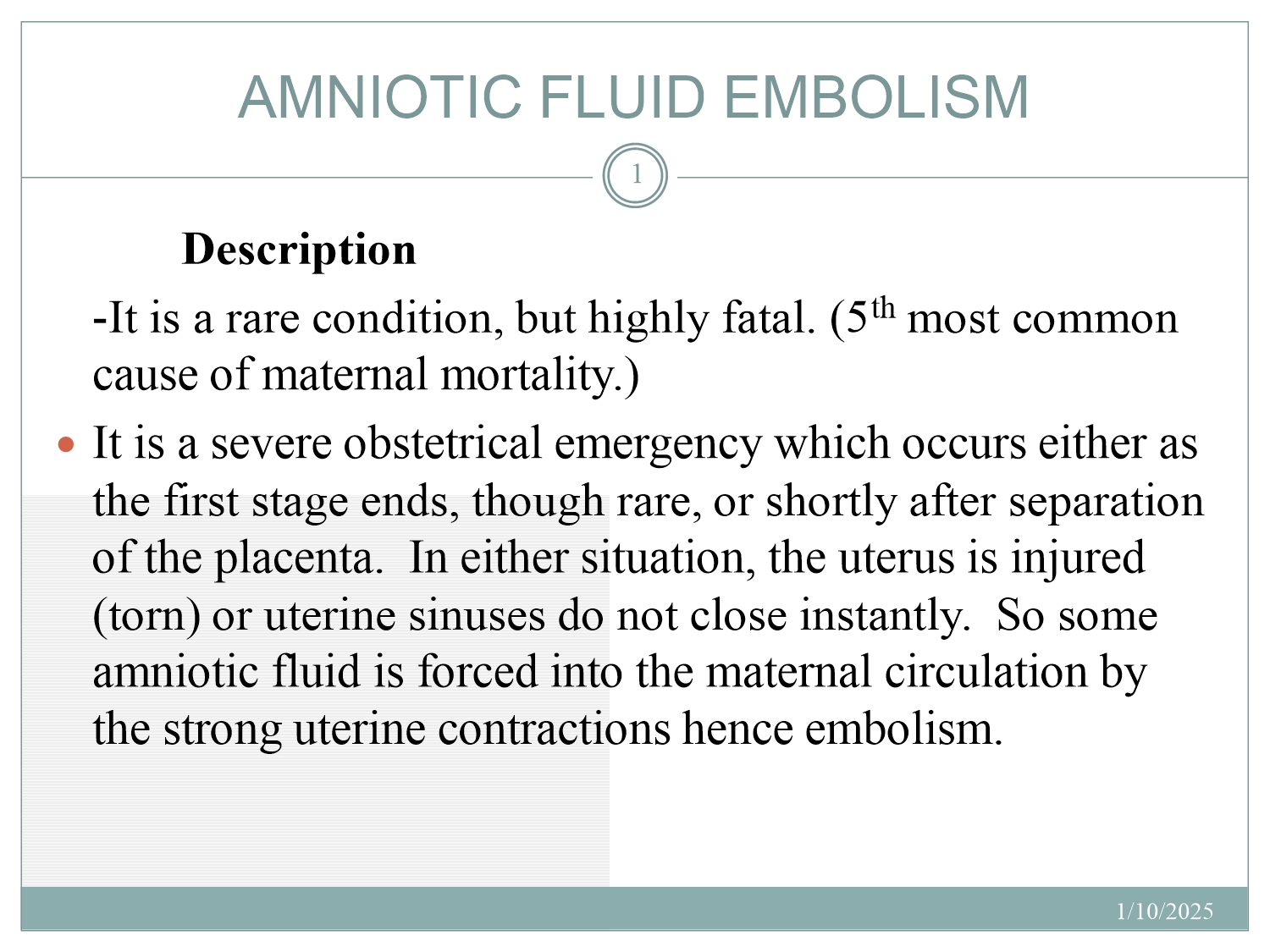
It is a rare condition, but highly fatal. (5th most common
cause of maternal mortality.). It is a severe obstetrical emergency which occurs either as the first stage ends, though rare, or shortly after separation of the placenta. In either situation, the uterus is injured (torn) or uterine sinuses do not close instantly. So some
amniotic fluid is forced into the maternal circulation by the strong uterine contractions hence embolism.
Below is the document preview.

Anatomy of head and neck
The head is the globular cranial end of the body, which contains brain and special sense organs, viz. eyes for vision, ears for hearing and equilibrium, nose for smell, and tongue for taste. It also provides openings for the respiratory and digestive systems. Structurally and developmentally, the head is divided into two parts: cranium and face.
457 Pages
1100 Views
0 Downloads
36.85 MB