KMTC: LYMPHADENITIS LECTURE NOTES
| Institution | Kenya Medical Training College |
| Course | KRCHN/ECN |
| Year | 2nd Year |
| Semester | Unknown |
| Posted By | Theatre Nurse mishi |
| File Type | |
| Pages | 14 Pages |
| File Size | 762.04 KB |
| Views | 2759 |
| Downloads | 0 |
| Price: |
Buy Now
 Buy via
whatsapp Buy via
whatsapp
|


Description
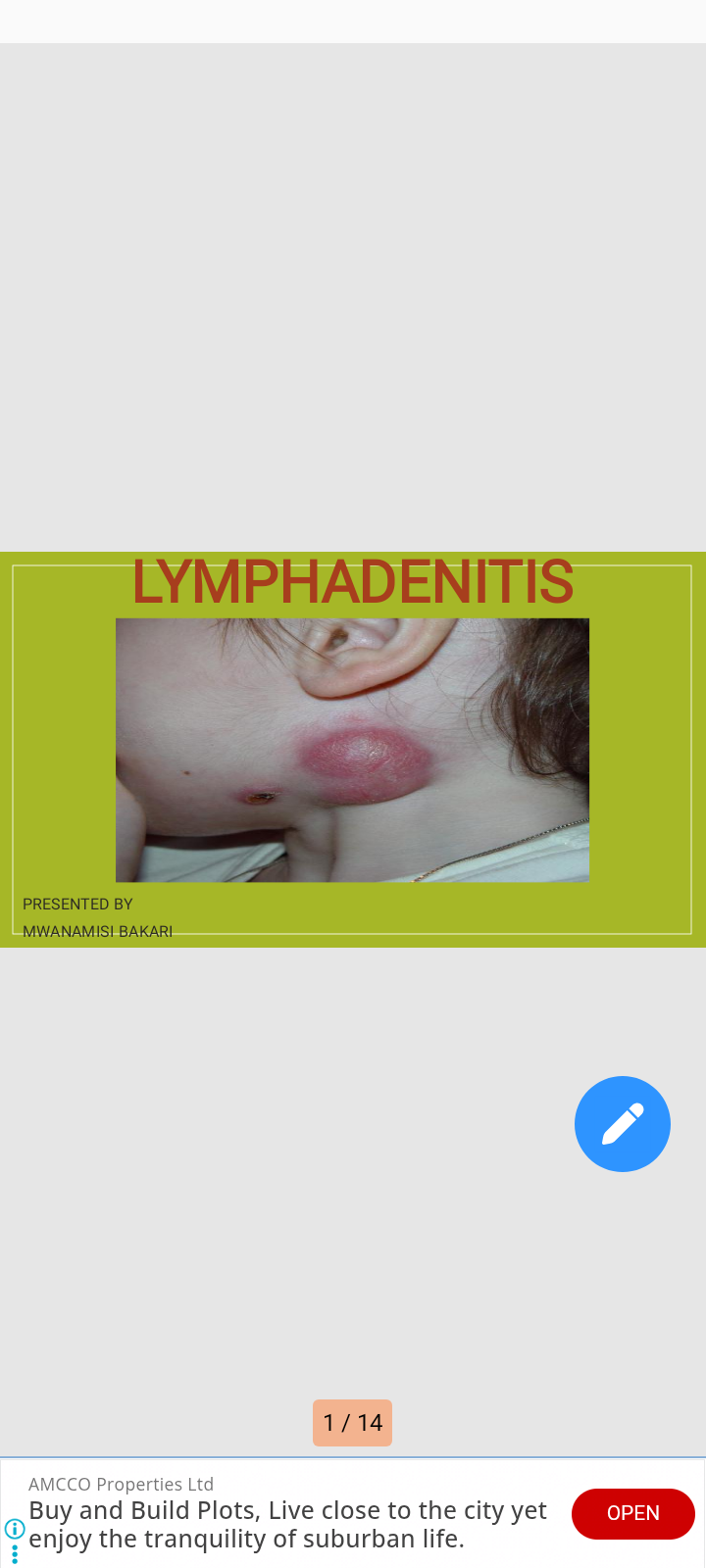
Lymphadenitis complete lecturer students notes for paediatric nursing for both Kenya registered community health nursing and enrolled community health nursing
Below is the document preview.

NEOPLASMS
Learning objectives:
At the end of this chapter, students are expected to:
1. Differentiate neoplastic lesions from non-neoplastic ones.
2. Contrast benign from malignant tumors.
3. Describe methods and mechanisms of metastasis.
4. List the etiologic factors in carcinogenesis.
5. Understand clinical effects of neoplasms
6. Know the diagnostic modalities for cancers
10 Pages
256 Views
0 Downloads
145.23 KB
INTRODUCTION TO HEALTH RECORDS MANAGEMENT
Get a copy of full notes on INTRODUCTION TO HEALTH RECORDS MANAGEMENT.
INTRODUCTION TO HEALTH RECORDS MANAGEMENT
Definition of Health Records
A health record is a systematic collection of information about a patient's health status and healthcare services received over time. It contains demographic, medical, legal, financial, and administrative information used in patient care and health management.
The health record may exist in:
Paper format (Manual Health Records)
Electronic format (Electronic Health Records - EHR)
Hybrid format (Combination of paper and electronic)
110 Pages
1657 Views
0 Downloads
939.64 KB
HEMODYNAMIC DISORDERS
Learning objectives
Upon completion of this chapter, students should be able to:
1. Explain how fluid balance is maintained across the arteriolar & venular end of the vasculature by Starling forces
2. Know the pathologic conditions occurring when the balance between the above forces is disrupted across the vascular wall under different conditions, i.e., edema
3. Understand and explain the cause and pathogenesis of clinical conditions like myocardial infarction, deep venous thrombosis, pulmonary thromboembolism, etc.….
4. Know the pathogenesis of edema of congestive heart failure, nephrotic syndrome, cirrhosis, and other clinical conditions
5. Have the basic knowledge about various types of shock, their pathogenesis, manifestations, and complications
12 Pages
1663 Views
0 Downloads
124.04 KB
CONGENITAL AND HEREDITARY DISEASE
Objectives
When you have completed this chapter, you should be able to:
1. Define a congenital disorder.
2. Understand the birth prevalence and population prevalence of congenital disorders.
3. List the causes of congenital disorders.
4. Understand chromosomal inheritance.
5. Understand the inheritance of single genes.
6. Define a multifactorial congenital disorder.
7. Define a teratogen and know their dangers.
8. List different types of structural congenital disorders
15 Pages
1602 Views
0 Downloads
171.99 KB
HEALTH ABBREVIATIONS
ALS Advance Life Support, amyotrophic lateralsclerosis
ALT alanine amino-transaminase, Argon lasertrabeculoplasty
A.M before noon
A-Mask aerosol mask
AM against medical advice, American Medical Association amb ambulatory
amb care ambulatory care
AMI acute myocardial infarction
Amino amniocentesis
AML acute myelogenous leukemia
amp ampule
amt amount
ANA antinuclear antibody
ANC Absolute neutrophil count
AND anterior nasal drainage
ANE Anesthesiology
anes Anesthesia
ank. ankle
ANLL acute non-lymphocytic leukemia ant anterior
ante before
Ant Seg anterior segment
36 Pages
1570 Views
0 Downloads
506.88 KB
THEATRE SAFETY PRECAUTIONS CDAAC PAST PAPER
THEATRE SAFETY PRECAUTIONS CDAAC PAST PAPER
These notes provide comprehensive coverage of operating theatre technology and surgical practice. They include theatre safety, infection prevention and control, patient positioning, operating table attachments and accessories, waste management, cleaning procedures, standard and transmission-based precautions, informed consent, surgical safety checklists, patient transfer techniques, surgical counts, and other essential principles required for safe and effective perioperative care. The notes are suitable for revision, examination preparation, and practical reference for theatre technologists and other operating theatre personnel.
7 Pages
1469 Views
0 Downloads
149.2 KB
Clinical Rotation Report – Perioperative Theatre Technology
Explore this Clinical Rotation Report – Perioperative Theatre Technology, a useful academic resource for perioperative theatre technology student and medical students documenting their clinical experience in the operating theatre. The report covers perioperative procedures, theatre preparation, infection prevention and control, surgical instruments, patient safety, and clinical activities performed during rotation. Ideal for students undertaking clinical attachment, practicum, or theatre technology training, this resource supports professional report writing and clinical documentation. Download and customise it to meet your academic requirements.
422 Views
0 Downloads
24.24 KB